
Saffron supplements for kids are everywhere right now. The studies behind them are real. So why do some parents see a different child in two weeks, and others see nothing at all after months? The answer is not in the spice.

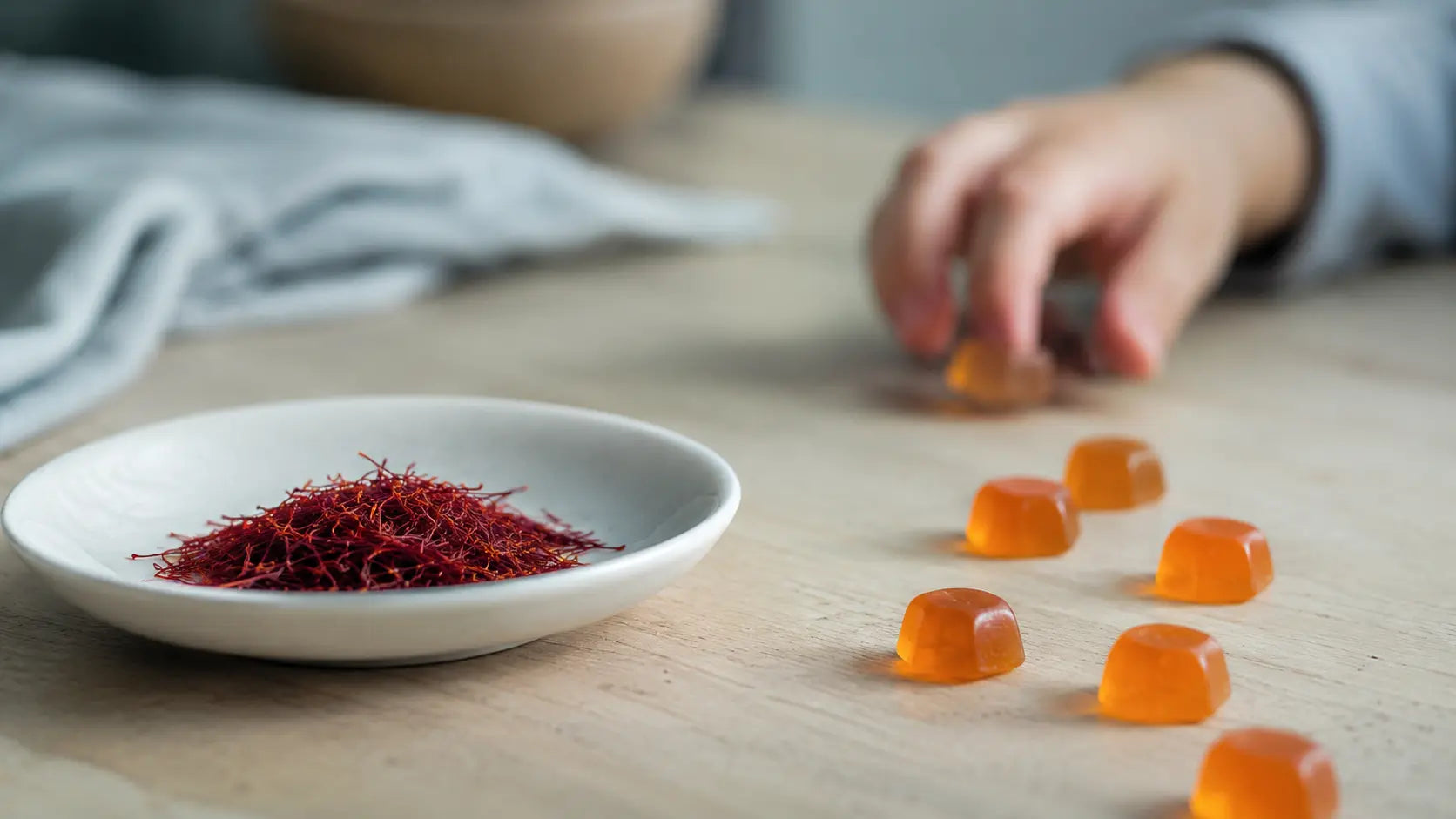
If you have a child with ADHD and you have spent any time on Instagram or in a parenting group this year, you have seen the saffron ads. Gummies, chews, drops, "clinically studied", "as effective as medication". A spice that used to live in the back of the pantry is suddenly the most talked-about supplement in the ADHD world.
So let me answer the question parents actually ask me in clinic, which is not "is saffron good?" but "is it going to work for my kid?"
The honest answer is: it might. And whether it does has less to do with the saffron than with where it lands.
The studies exist, and they are not nothing. In 2019, a small randomized, double-blind trial in Tehran compared a saffron extract with methylphenidate in 54 children with ADHD for six weeks. On the parent and teacher rating scales, the two groups improved by about the same amount.[1] It was a pilot, it was short, and 54 children is a small number. But it was a real trial with a real comparator, and that is more than most supplements can say.
In 2022, a Spanish team followed 63 children and adolescents taking a standardized saffron extract, some alongside their medication, and reported improvements in hyperactivity and, notably, in sleep.[2] Saffron's active compounds, crocin and safranal, appear to work on serotonin signalling in the brain, which is the same territory several antidepressants work on, and the reason saffron has a decent evidence base in adult mood research too.[3]
Here is what parents tell me, in clinic and in the hundreds of messages that reach this site. Of the parents who list what they have already tried, roughly one in six names saffron, which tells you how big this wave is. And what they say about it splits three ways.
Some of them loved it. One mother wrote that of everything in the cabinet, "the only one that has really helped was saffron," and that she was now "looking for a little more support." Another listed magnesium, saffron, zinc and fish oil and wrote that all but the fish oil helped, and that her son takes them instead of his medication now.
Others saw nothing. "Saffron supplements for two months. Didn't work," one wrote, flatly. Another listed a brand of saffron gummies with three words after it: "did not helped." A third had been through three prescriptions and the saffron gummies too, and summed it up as "nothing has helped." One parent gave the most honest answer of all: "unsure if helped, possibly."
And one had to stop. Saffron, she wrote, "caused horrible behaviors that we couldn't continue." A single report, and I would not build a rule on it, but it belongs in the picture.
You see the same split on Reddit. In one long thread on r/ParentingADHD, a mother who had bought a large supply of saffron gummies after reading about the studies gave them to her son every day for months and wrote that she "didn't notice a difference at all." In the same thread, another parent started 15 mg a day and a week later reported her son sitting through two pages of math in one go. A third said her daughter's moods had settled on a 7 mg capsule. Same spice. Three different children. Three different outcomes.
A saffron gummy is a delivery. It puts a compound into a child's mouth and relies on his gut to break it down, absorb it and hand it to his blood. Every supplement works this way, and it works fine when the gut is working fine.
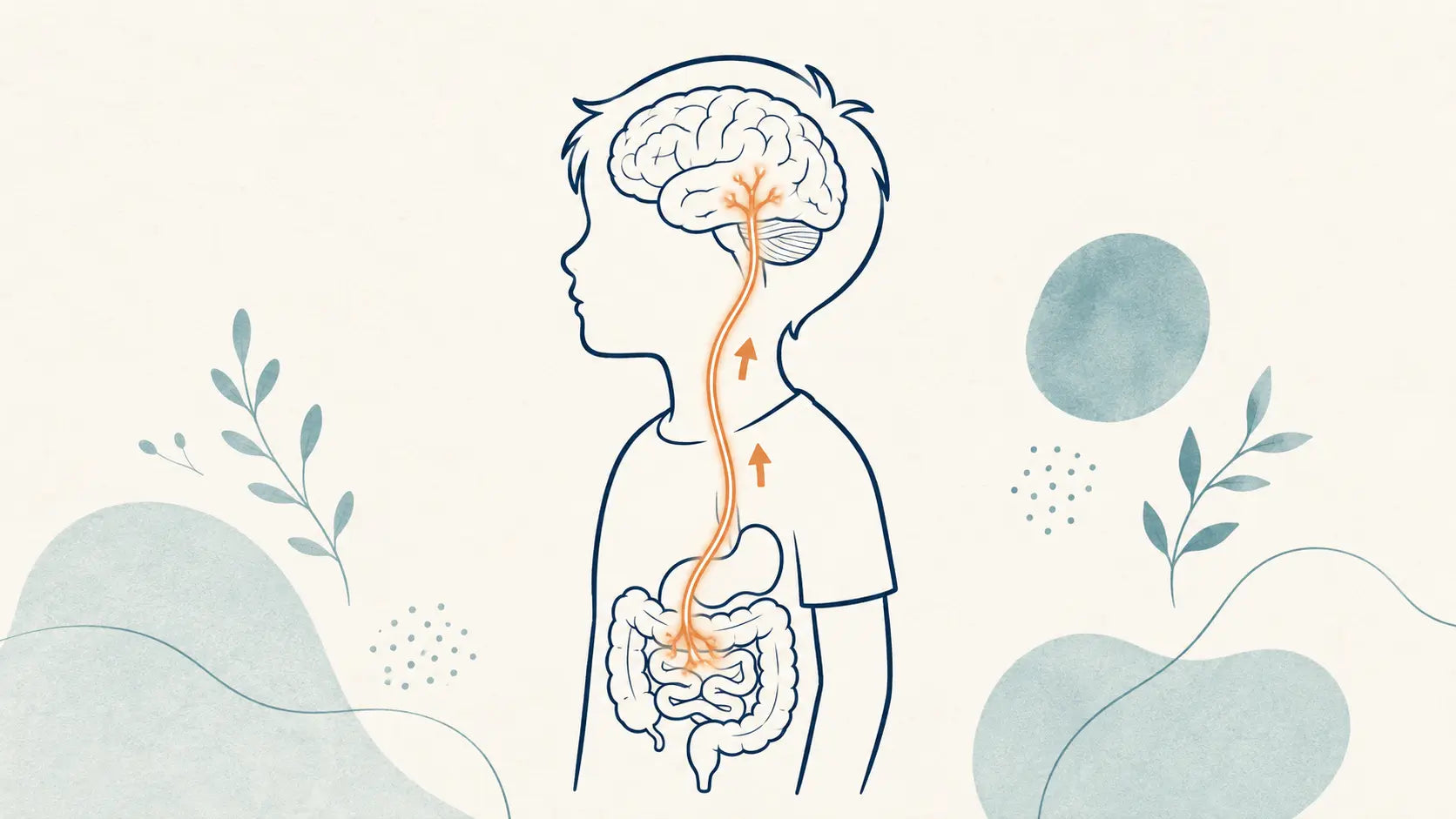
In children with ADHD, that is often the shaky assumption. Study after study finds that these children carry a measurably different bacterial community in their gut than other kids, with less of the bacteria that keep the lining healthy.[5] The most common reason is one nobody blames: the courses of antibiotics almost every child gets before the age of five, which clear the good bacteria along with the infection and leave the gut to grow back on a modern diet that does not help it.[6] When the lining is compromised, what a child swallows and what a child absorbs become two different numbers.
Then, in 2025, came the study that explains the saffron thread better than anything else I have read. Researchers analysed the gut microbiome of children with ADHD who took part in a randomized trial of micronutrients. Same supplement, same dose, same diagnosis. The children who responded were distinguished from those who did not by their gut: two families of beneficial bacteria increased in the responders and not in the others.[4]
Most saffron for kids comes as a gummy, because kids take gummies. Two things about that format are worth knowing. First, a gummy asks the gut to do the work before anything happens: dissolve it, break it down, absorb it. That is the very step that is unreliable in the child we just described. Second, many "sugar-free" gummies get their sweetness from sugar alcohols, which are known to upset small stomachs. For a child who already has stomach aches, that is not a neutral choice.
None of that makes saffron bad. It makes the gummy a poor vehicle for a child whose gut is the weak link.
Don't conclude that "supplements don't work" for your kid. Conclude that a supplement aimed at the brain did not get through. That is a different problem, and it has a different solution.
Work on the gut first. Clear the overgrowth off the lining, repair it, and refill the raw materials a child with ADHD is short of: tryptophan, magnesium, zinc. A small number of children's formulas are built this way, and in our comparison of the five most popular ADHD supplements, Nutriveen Gut Balance was the one that did both steps. If saffron did work for your child, the same logic says it should work better on a gut that is absorbing.
Give anything you try a full month, every day. The saffron trials ran six weeks. The mother who saw nothing gave it months. The one who saw change saw it in a week. Time is not what separates them.
Saffron is a legitimate option with real, if small, trials behind it, and for some children it clearly helps. But when one in six parents I hear from has already tried it and their answers split three ways, the spice is not the variable. The gut it lands in is. Fix the gut, and whatever you give your child afterwards, saffron included, has a chance of arriving. Here is how that works.
Parent quotations are reproduced as parents wrote them, in messages to this site and in public discussions on r/ParentingADHD, lightly trimmed for length and with original spelling kept. They are individual experiences, not evidence of effect.
Medical Disclaimer: This article is for informational purposes only and does not constitute medical advice. Do not start, stop or change any prescribed treatment on the basis of this article; consult a qualified healthcare provider.
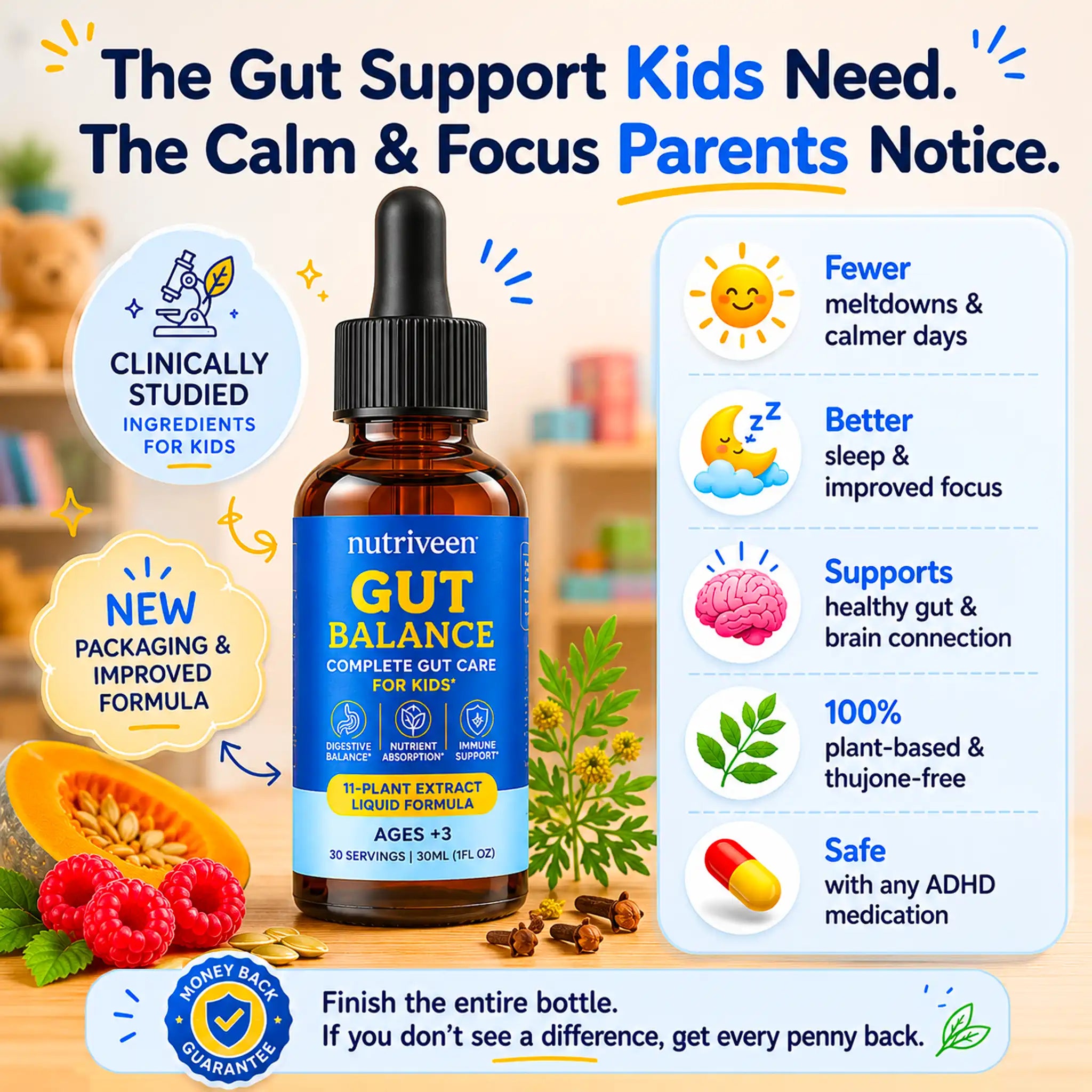
The only formula in our comparison that clears the gut lining first, repairs it, and delivers tryptophan, magnesium and zinc as a liquid. Score 9.6 of 10 across our five criteria.

Independent reviews of children's nutrition and supplements, backed by peer-reviewed evidence. Written by Dr. Tessa Ashcombe.
The statements on this website have not been evaluated by the Food and Drug Administration. Products featured on this site are not intended to diagnose, treat, cure, or prevent any disease. Individual results may vary and are not guaranteed.
The content provided on this website is for informational and educational purposes only and is not intended to constitute medical advice. No doctor-patient relationship is created by the use of this site. Always seek the advice of a qualified healthcare professional with any questions you may have regarding a medical condition, treatment, or the use of any product.
Product reviews and rankings displayed on this website are compiled from a variety of sources, including publicly available information, third-party websites, and user-generated content. This website operates as an independent comparison platform and may receive compensation from companies featured on the site. Such compensation does not guarantee placement or ranking and does not influence our intent to provide informative content.